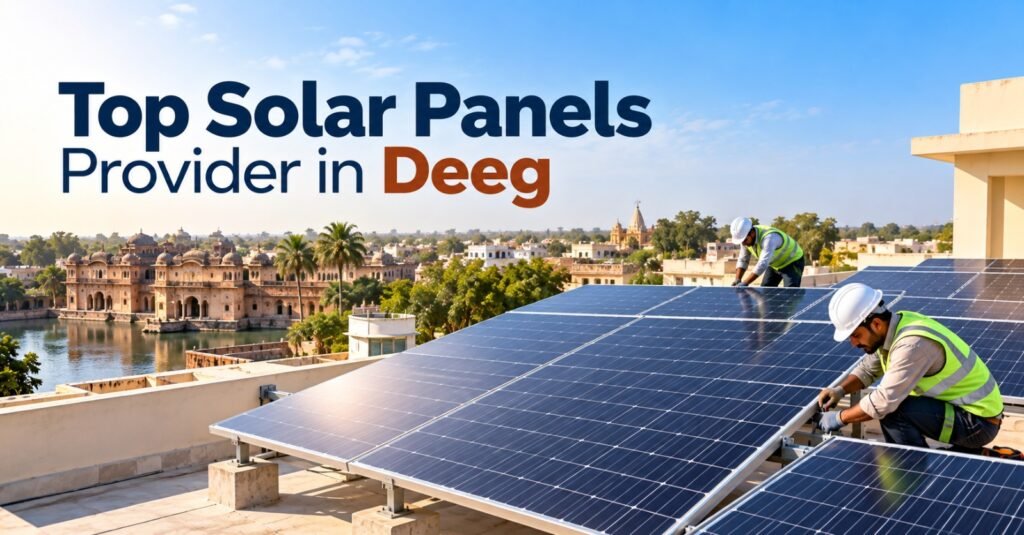
Installing solar panels is a long-term investment, so choosing a system only on the basis of price is not always the right approach. The panel technology, inverter, available rooftop space, electricity consumption, installation quality and after-sales support all affect the performance of a solar system.
For homeowners and businesses in Deeg, solar can be a practical way to reduce dependence on grid electricity and manage long-term power costs. This guide explains what buyers should check before choosing Solar Panel Installation in Deeg, from system selection and rooftop requirements to pricing, subsidy and maintenance.
Why Consider Solar Panel Installation in Deeg?
A solar system converts sunlight into electricity that can be used for your home, shop, office, factory or other property. The amount of electricity a system can generate depends on its capacity, panel efficiency, orientation, shading and local weather conditions.
For a buyer, the important point is to select a system according to actual electricity consumption rather than simply choosing the largest capacity available. A properly planned Solar System in Deeg can help reduce monthly electricity bills while making better use of an otherwise unused rooftop.
Types of Solar Systems Available
Before contacting a Solar Company in Deeg, understand the basic types of systems available.
On-Grid Solar System
An on-grid system works alongside the electricity grid. Solar power is used by the property, while excess generation can be exported to the grid according to the applicable net-metering or electricity regulations. This option is generally considered by consumers who want to reduce their electricity bills without depending entirely on batteries.
Off-Grid Solar System
An off-grid system operates independently of the electricity grid and normally uses batteries to store solar energy. It can be useful for locations where grid electricity is unavailable or unreliable. The additional battery requirement usually makes an off-grid system more expensive than a basic on-grid installation.
Hybrid Solar System
A hybrid system combines solar panels, grid connectivity and battery storage. It can provide greater flexibility where backup power is important.
The right choice depends on your electricity usage, backup requirements, budget and grid availability.
How to Choose the Right Solar System
Start by checking your electricity bills from the previous several months. Look at your average monthly units rather than basing the decision on one unusually high or low bill.
A professional installer can assess your consumption and recommend an appropriate system size. For a home, factors such as the number of appliances, air conditioners, refrigerators, water pumps and other major loads should be considered. For businesses, operating hours and machinery loads can significantly affect the required capacity. The objective should be to install a system that matches your actual energy requirement and available rooftop area.
Home Solar Requirements
A Home Solar Panel setup can be suitable for houses that have sufficient roof space and regular electricity consumption. Before installation, check:
- Average monthly electricity consumption
- Available shadow-free roof area
- Roof condition and structural suitability
- Direction and inclination of the roof
- Current electrical connection
- Future electricity requirements
- Whether battery backup is required
Don’t select a system just because someone recommends a particular kW capacity. A site assessment gives a much better basis for deciding the right system.
Commercial Solar Panel Requirements
Businesses have different energy requirements from homes. Shops, offices, schools, hotels, workshops and industrial facilities may have higher daytime electricity consumption. Commercial Solar Panels should therefore be planned around the property’s load profile and operating schedule.
For a commercial installation, buyers should also check the available roof area, sanctioned electrical load, connection requirements, structural condition and applicable approvals. A larger installation also makes installation quality and after-sales service particularly important because system downtime can affect business operations.
Rooftop Space Required for Solar
Rooftop solar needs sufficient shadow-free space for installing panels safely. The exact area depends on the panel wattage, panel dimensions, system capacity, spacing and the layout of the roof. Water tanks, staircases, parapet walls and nearby buildings can reduce the usable area.
A site survey should therefore be completed before finalizing the system size. The installer should also check whether nearby trees or buildings can create shadows during important sunlight hours.
Understanding Solar Panel Price in Deeg
There is no single fixed Solar Panel Price in Deeg because the final project cost depends on several components. Important cost factors include:
- Solar system capacity
- Panel brand and technology
- Inverter type and brand
- Mounting structure
- Wiring and protection equipment
- Installation and commissioning
- Metering or other applicable requirements
- Battery storage, if required
- Roof and site conditions
When comparing quotations, don’t compare only the total amount. Check exactly what is included in each quotation. A lower initial quote may not represent better value if important components or services are excluded.
Solar Subsidy in Deeg
Eligible residential consumers may be able to receive benefits under applicable government solar subsidy schemes. The actual subsidy amount, eligibility criteria, approved system capacity, application process and installation requirements can change over time. Before making a purchase, buyers should verify the latest Solar Subsidy in Deeg rules through the official government or electricity-distribution channels and confirm whether the selected installer and system meet the applicable requirements. Do not assume that every solar project qualifies for the same subsidy.
What Should You Check Before Buying Solar Panels?
The panels are one of the most visible parts of a solar system, but they are not the only component that matters.
Solar Panels
Check the panel technology, rated capacity, efficiency, product warranty and applicable performance warranty. Ask for proper product documentation rather than relying only on verbal promises.
Inverter
The inverter converts the electricity generated by the panels into usable electricity for the property. Its capacity and specifications should match the solar system and electrical requirements. Check the inverter warranty, monitoring features, efficiency and service support.
Mounting Structure
The mounting structure should be appropriate for the rooftop and designed for long-term outdoor exposure. Proper installation is important for panel stability and system safety.
Warranty
Ask for separate warranty details for panels, inverter and other major components. Also clarify whether warranty claims are handled directly by the manufacturer or through the installer.
Solar Installation Process
A professional Solar Panel Installation in Deeg generally involves several stages.
1. Electricity Consumption Assessment
The installer reviews your electricity bills and discusses your current and expected energy requirements.
2. Site Survey
The rooftop is checked for usable space, shading, orientation, access and structural conditions.
3. System Design
Based on the assessment, the installer recommends system capacity, panels, inverter, mounting arrangement and other equipment.
4. Quotation and Documentation
The buyer should receive a clear quotation showing system specifications, included components, warranty terms and installation scope.
5. Installation
The mounting structure, panels, inverter, wiring and protection equipment are installed according to the approved design.
6. Testing and Commissioning
The system is tested before being put into regular operation. Applicable grid connection and metering procedures are completed where required.
Maintenance After Installation
Solar systems generally require routine maintenance rather than daily attention. Dust and dirt can accumulate on panels and reduce their ability to receive sunlight. Depending on the location and surrounding environment, panels may need periodic cleaning. Buyers should also keep an eye on inverter alerts, unusual system behaviour, visible cable damage or changes in electricity generation.
A reliable installer should explain the recommended maintenance schedule and provide support if a technical issue occurs.
How to Select a Reliable Solar Company in Deeg
Choosing the installer is just as important as choosing the equipment. Before placing an order, ask the Solar Company in Deeg about:
- Previous installation experience
- Product brands and specifications
- Warranty terms
- Installation scope
- System monitoring
- Maintenance support
- Service and complaint process
- Applicable documentation and approvals
- Expected project timeline
Avoid making a decision solely because a company offers the lowest quotation. A solar system is expected to work for many years, so installation quality and service support matter throughout its operating life.
MV Solar provides solar solutions and installation services for customers in Deeg, helping buyers assess their requirements and choose suitable solar systems for residential and commercial applications.
Buyer Checklist Before Installing Solar
Before finalizing your purchase, make sure you have checked:
Previous electricity bills and average consumption
Required solar system capacity
Available shadow-free rooftop space
Panel specifications and warranty
Inverter specifications and warranty
Mounting structure details
Complete installation cost
Subsidy eligibility, if applicable
Grid connection requirements
Monitoring facility
Solar is a long-term investment, and the best system is not necessarily the cheapest one or the largest one. The right decision comes from matching system capacity with electricity consumption, checking the rooftop carefully and selecting dependable equipment and installation support.
If you are planning Solar Panel Installation in Deeg, compare complete quotations, understand the warranty and subsidy requirements, and choose an installer that can support you after installation as well as during the purchase.
FAQs
1. What is the cost of solar panel installation in Deeg?
The cost depends on system capacity, panel and inverter brands, mounting structure, installation requirements and whether batteries are included. A site assessment is required for an accurate quotation.
2. How do I choose the right solar system for my home?
Start with your recent electricity bills and average monthly consumption. Rooftop space, future electricity needs and backup requirements should also be considered.
3. Can I install rooftop solar on any roof?
Not necessarily. The roof should have sufficient usable space, suitable structural condition and preferably good exposure to sunlight with minimal shading.
4. Is solar subsidy available in Deeg?
Eligible residential consumers may qualify under applicable government subsidy schemes. Eligibility and subsidy rules can change, so buyers should verify the latest official requirements before installation.
5. What is the difference between on-grid and off-grid solar?
An on-grid system works with the electricity grid, while an off-grid system operates independently and generally requires batteries. Hybrid systems combine grid connectivity with battery storage.
6. How often do solar panels need maintenance?
Solar panels mainly require periodic cleaning and basic system checks. The frequency depends on dust, weather and the installation environment.
7. Why should I choose a professional solar installer?
Professional installation helps ensure proper system design, electrical connections, mounting, testing and documentation. Good after-sales support is also important for a long-term solar investment.