

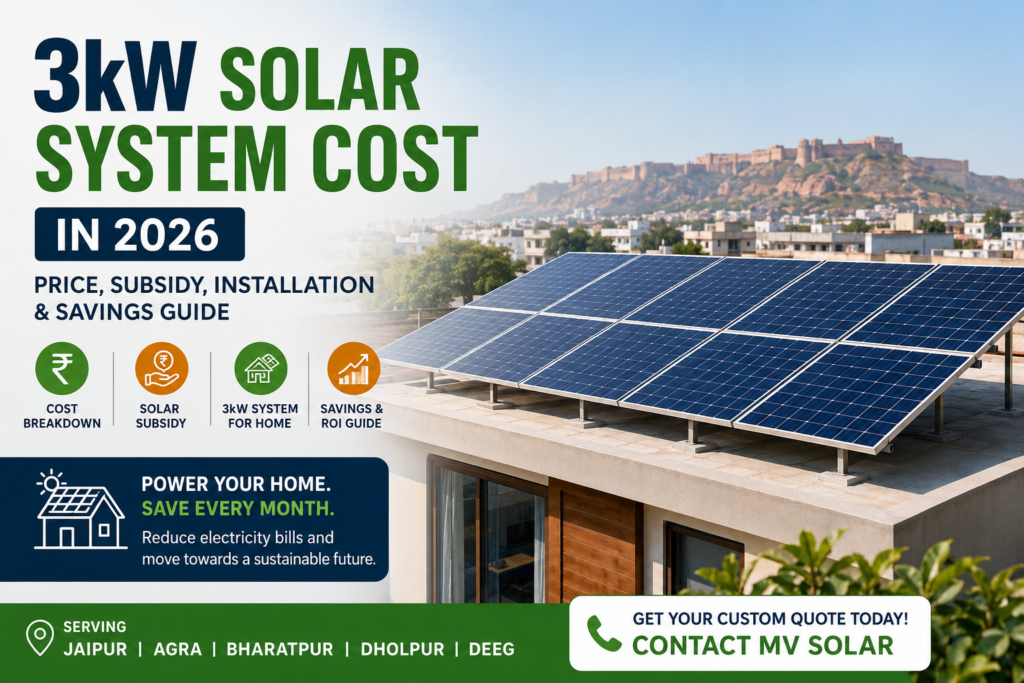
If you are planning to install solar panels at home, a 3kW system is one of the most practical options for a typical Indian household. But before making a decision, it is important to understand the 3kW Solar System Cost, what is included in the quotation, how much subsidy you may receive, and how much electricity you can realistically save.
In 2026, the cost of a 3kW rooftop solar system can vary considerably depending on the solar panel technology, inverter, mounting structure, wiring, roof conditions, installation requirements and local DISCOM process. Current market references put quality residential 3kW on-grid systems broadly around ₹1.5 lakh – ₹2.2 lakh before subsidy, but this should be treated only as an indicative range rather than a fixed market rate. For homeowners in Jaipur, Agra, Bharatpur, Dholpur and Deeg, getting an itemised quotation after a roof survey is the best way to know the actual project cost.
What Is a 3kW Solar System?
A 3kW solar system has a total solar generation capacity of 3 kilowatts. It generally consists of solar PV modules, an inverter, mounting structures, DC and AC cables, protection devices, earthing and other balance-of-system components.
For homes connected to the electricity grid, an On-Grid Solar System is usually the most economical configuration. Electricity generated during the day is used by the home, while excess generation can be exported to the grid according to the applicable net-metering or billing mechanism. A 3kW rooftop system can be suitable for households with moderate electricity consumption, particularly where appliances such as fans, refrigerators, televisions, washing machines, pumps and air conditioners contribute to the monthly bill. The correct system size, however, should be based on actual electricity consumption rather than simply the size of the house.
3kW Solar System Price in 2026
There is no single nationwide 3kW Solar System Price. Two homes can receive different quotations even when they install the same system capacity. An indicative 2026 market range for a quality residential 3kW on-grid installation is approximately ₹1.5 lakh to ₹2.2 lakh before subsidy. Published 2026 market references show similar variations, with prices changing according to equipment, installation scope and service inclusions. The important point is to compare what you are actually receiving rather than choosing a quotation simply because it has the lowest number.
Indicative 3kW Solar System Cost Comparison
| Major Component | What It Covers | Effect on Final Cost |
|---|---|---|
| Solar Panels | PV modules and required capacity | Brand, efficiency and technology can change the price |
| Solar Inverter | Converts DC solar power into usable AC power | String, hybrid and other configurations have different costs |
| Mounting Structure | Supports panels on the roof | Height, material and roof type affect pricing |
| Cables & Protection | DC/AC cables, earthing and safety devices | Cable length and electrical requirements vary |
| Installation | Labour, commissioning and system setup | Roof access and installation complexity matter |
| Metering & Documentation | Net-metering/DISCOM-related work where applicable | Local process and charges can vary |
| Civil/Additional Work | Waterproofing, elevated structures, extra supports, etc. | Depends entirely on the property |
This is why a very low 3kW Solar Panel Price advertised online may not represent the complete installed system.
3kW Solar Subsidy in 2026
For eligible residential consumers, the PM Surya Ghar: Muft Bijli Yojana provides Central Financial Assistance for rooftop solar. The published subsidy structure provides ₹30,000 per kW for the first 2kW and ₹18,000 for the additional capacity up to 3kW. This makes the maximum central subsidy for a 3kW residential system ₹78,000. For systems above 3kW, the central subsidy remains capped at ₹78,000. The scheme’s latest operational guidelines indicate implementation through March 31, 2027, subject to the applicable scheme conditions. Subsidy should not be treated as an automatic discount from every solar quotation. Eligibility, approved equipment, residential consumer status, portal application, installation and DISCOM verification all matter. The safest approach is to confirm your eligibility and the applicable subsidy process before finalising the purchase.
How Much Electricity Can a 3kW System Generate?
Actual generation depends on sunlight, roof orientation, panel tilt, temperature, shading, dust, equipment efficiency and maintenance.
For Rajasthan conditions, a well-designed 3kW system can produce several hundred units of electricity per month, with seasonal variations. A practical planning estimate is around 350–450 units per month on average, but actual generation should be calculated after considering the property’s location and roof conditions. Summer does not automatically mean maximum monthly generation. High temperatures can reduce panel efficiency, while monsoon clouds, dust and winter conditions can also affect output. This is why professional solar design should use the site’s actual conditions rather than promising one fixed generation figure.
How Much Can You Save With a 3kW Solar System?
Your savings depend mainly on how much solar electricity you consume directly and how surplus electricity is treated under the applicable grid-billing arrangement. For example, suppose a household uses around 350–400 units of electricity per month and installs a properly designed 3kW system. A substantial portion of its annual electricity requirement may be supplied by solar.
If the effective electricity value of the displaced grid power is ₹7 per unit, 400 solar units would represent roughly ₹2,800 of electricity value. This is only an illustration; your actual bill reduction will depend on tariff slabs, fixed charges, consumption timing and DISCOM rules. Therefore, claims such as “every 3kW system will make your electricity bill zero” should be avoided. Solar can significantly reduce electricity costs, but fixed charges and other billing components may remain.
3kW Solar System ROI and Payback
The payback period is determined by: Net Solar Investment ÷ Annual Electricity Savings = Approximate Payback Period
For example, if an illustrative project costs ₹1.8 lakh before subsidy and the eligible central subsidy is ₹78,000, the remaining investment would be ₹1.02 lakh before considering any additional project-specific charges or incentives. If the system delivers electricity savings worth ₹30,000 annually, the simple payback would be approximately 3.4 years. This is an example, not a guaranteed return. Actual ROI depends on the final quotation, subsidy, generation, electricity tariff, system degradation, maintenance and household consumption.
Is a 3kW Solar Panel for Home Enough?
A 3kW Solar Panel for Home can be a good choice for a small or medium-sized residential property with moderate electricity consumption. It can work particularly well for households where daytime electricity consumption is reasonably high. If your home regularly uses multiple air conditioners, electric geysers, heavy pumps or other high-consumption appliances, 3kW may not be sufficient. Instead of selecting a system based on the number of bedrooms, check your previous 6–12 months of electricity bills. Your average monthly units provide a much better starting point for system sizing. A roof survey is equally important because the available shadow-free area can limit the system size.
On-Grid vs Hybrid Solar for a 3kW Home
For homeowners primarily looking to reduce their electricity bill, an On-Grid Solar System is generally the simpler and more cost-effective option. An on-grid system works with the existing electricity grid and normally does not include batteries. This keeps the initial investment lower. A hybrid system adds battery storage and can provide backup during suitable operating conditions, but batteries increase the initial cost and require replacement consideration over the system’s life. If your main goal is electricity-bill reduction rather than backup power, compare an on-grid configuration first.
3kW Solar System Cost in Jaipur
The 3kW Solar System Cost in Jaipur can vary based on JVVNL-related requirements, roof design, installation accessibility, mounting structure, equipment selection and the scope of the vendor’s service. Jaipur’s strong solar resource makes rooftop solar attractive, but the final quotation should still be based on the property’s actual roof rather than a generic city price. For homeowners searching for a Solar Company in Jaipur, compare panel specifications, inverter warranty, structure quality, installation scope and after-sales support—not just the headline price.
3kW Solar System Cost in Agra
For homeowners considering the 3kW Solar System Cost in Agra, the final quotation can depend on the local electricity connection, roof structure, meter-related requirements and installation conditions. Older properties may require additional structural or electrical work before panels can be installed. A proper site inspection can identify these requirements before the project begins. Choosing a local installation partner can also make coordination and after-sales service more convenient.
3kW Solar System Cost in Bharatpur
The 3kW Solar System Cost in Bharatpur depends on the selected system configuration and the individual property’s installation requirements. For a standard residential rooftop, the main cost components remain panels, inverter, mounting structure, wiring, protection equipment and installation. However, longer cable runs, roof height or additional electrical work can increase the final quotation. Homeowners should request a complete written quotation showing what is included and excluded.
3kW Solar System Cost in Dholpur
When comparing the 3kW Solar System Cost in Dholpur, pay particular attention to the installation scope. The quoted price should clearly explain whether mounting structures, protection devices, earthing, wiring, commissioning and applicable documentation support are included. A slightly higher quotation can sometimes represent better equipment, stronger mounting hardware or more comprehensive installation support, so price alone should not determine the final decision.
3kW Solar System Cost in Deeg
For homeowners researching the 3kW Solar System Cost in Deeg, a site assessment is especially useful before confirming the system design. Roof direction, shading from nearby buildings or trees, available installation space and electrical connection details can influence both system performance and installation requirements. A customised quotation helps avoid unexpected additions after the installation work has started.
Solar Installation Cost: What Can Increase the Final Quote?
The Solar Installation Cost can change because every rooftop is different. Common factors include:
- Panel brand, wattage and technology
- Inverter type and specifications
- Mounting structure material and height
- Roof accessibility
- Cable length
- Earthing and protection requirements
- Additional civil or electrical work
- Net-metering or DISCOM-related requirements
- Warranty and after-sales service
- System design and installation complexity
Before signing a contract, ask for a detailed Bill of Materials and clearly confirm the warranty, installation scope and responsibilities for documentation.
Common Mistakes to Avoid When Buying a 3kW System
One common mistake is choosing the cheapest quotation without checking the equipment included. Another is calculating savings only from the solar generation figure while ignoring fixed electricity charges and household consumption patterns. Homeowners should also avoid assuming that a 3kW system is automatically suitable simply because it is popular. Your electricity bills should determine the capacity. Finally, do not compare two quotations unless you know whether both include the same panels, inverter, structure, installation, protection equipment and documentation support.
Home Solar Panel Installation: What to Expect
A professional Home Solar Panel Installation generally starts with understanding your electricity consumption and inspecting the property. The installer then assesses the roof, shading, orientation, electrical connection and available space before preparing the system design and quotation. After approval, the panels, inverter and supporting equipment are installed. Where applicable, the required grid connection and metering process is completed through the relevant DISCOM procedure. The final step is commissioning and checking that the system is operating correctly. This process is also why the final quotation cannot always be accurately determined from system capacity alone.
Why Choose MV Solar?
MV Solar provides solar solutions for residential customers across Jaipur, Agra, Bharatpur, Dholpur and Deeg. The focus should not simply be on installing panels, but on designing a system that matches the customer’s electricity consumption, roof conditions and budget. Whether you are comparing a 3kW Solar System Price, planning a 3kW rooftop installation or checking your potential Solar Subsidy, MV Solar can help you understand the equipment, installation requirements and expected project economics before you invest. For homeowners looking for a Solar Company in Agra, Solar Company in Bharatpur, Solar Company in Dholpur or Solar Company in Deeg, the same principle applies: get a site-specific quotation rather than relying on a generic online price.
Get a Customized 3kW Solar Quotation From MV Solar
The right 3kW system is not necessarily the cheapest system. It is the one that delivers the right balance of generation, equipment quality, installation safety and long-term value. If you are planning a 3kW residential solar installation in Jaipur, Agra, Bharatpur, Dholpur or Deeg, contact MV Solar for a customised assessment and quotation.
Share your latest electricity bill and basic roof details, and get a project estimate based on your actual consumption instead of relying on a one-size-fits-all price.